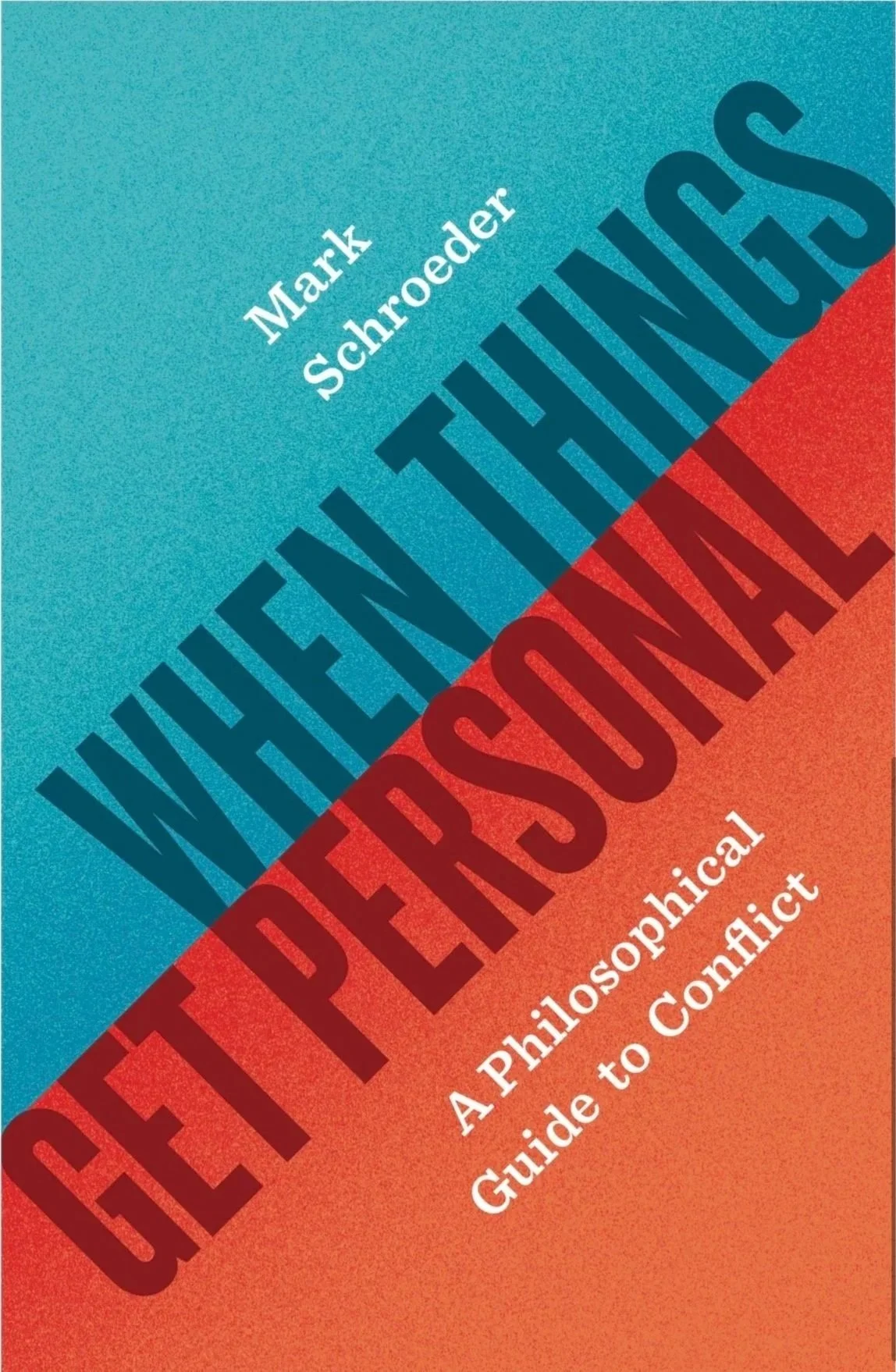
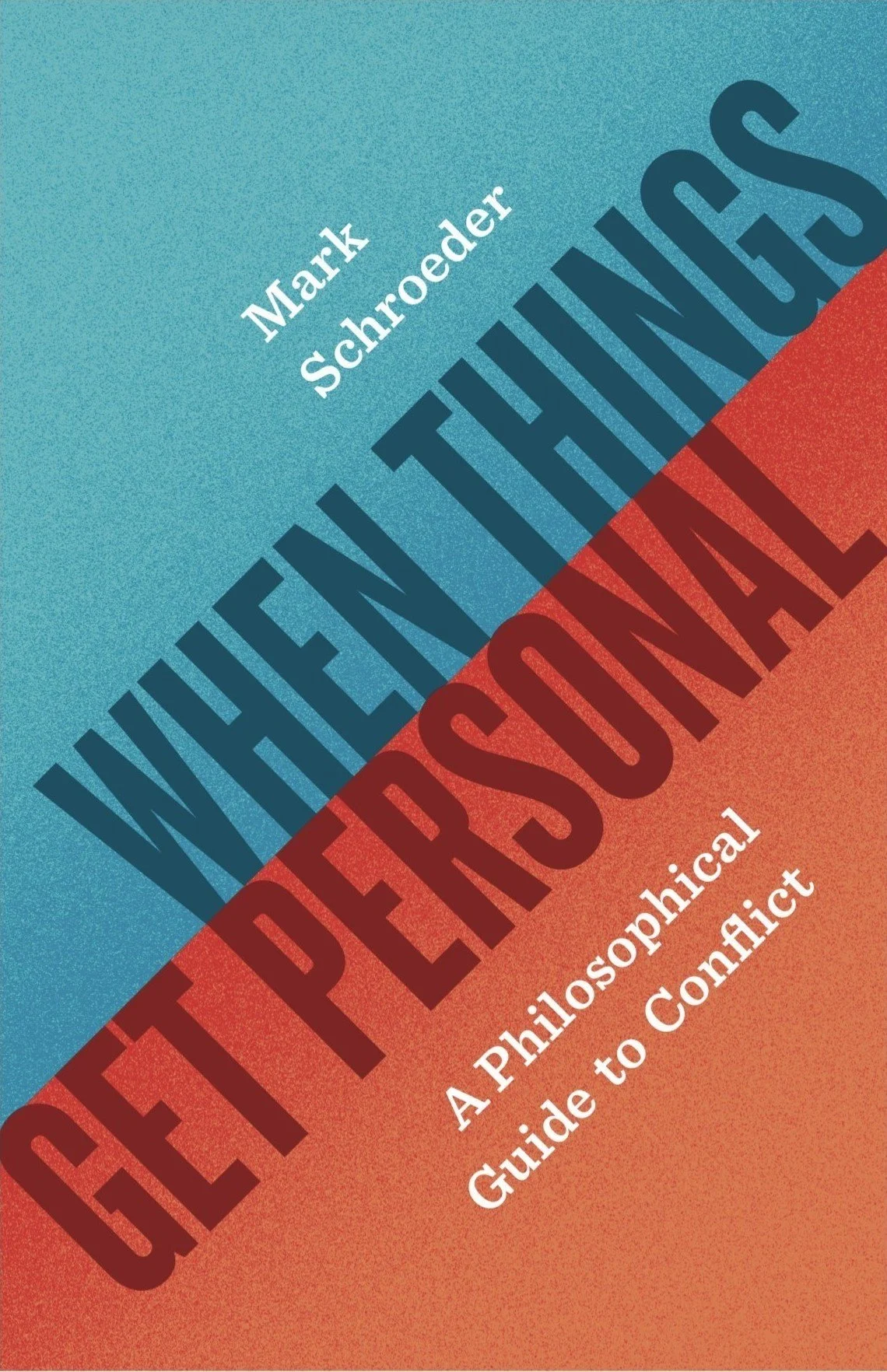
When Things Get Personal: A Philosophical Guide to Conflict, Princeton University Press, October 27, 2026, $24.95/£20.00.
Advance Praise
“If you’ve ever felt misunderstood, then you already know something about the idea at the center of this book. Schroeder’s powerful insight is that much of interpersonal conflict arises from the ways we read, misread, over-read, or under-read who people are from what they say and do. To bring so much of human conflict under such a simple principle is a great achievement.”—Barry Lam, host of the Hi-Phi Nation podcast
“This is a fascinating take on one of the most important and thorniest of philosophical questions: how do we navigate our identity as both person and thing in interpersonal relationships? Schroeder’s signal/noise distinction provides a key innovation in answering this question.”—C. Thi Nguyen, author of The Score: How to Stop Playing Somebody Else’s Game
“When Things Get Personal offers a new way of holding one another responsible. In defending this approach, Mark Schroeder engagingly explores a wide range of phenomena—from neurological and psychiatric disorders to emotional stress, from paternalism to sexism, from significant political disputes to minor spats. What emerges is a compelling guide to how we can minimize, and sometimes even resolve, interpersonal conflict.”—Sarah Buss, coeditor of Rethinking the Value of Humanity
“If ever there was a time when understanding what drives the dynamics of conflict was important, it’s right now – the book is wonderful.” - David Rutledge, The Philosopher’s Zone.
“Mark Schroeder is a big F-ing deal…Sometimes just putting a label to a problem where there isn’t one is half the battle.” - Spencer Case, Micro-Digressions.
“This was so insightful.” - Leon Garber, Seize the Moment.
“Not preachy or hard to understand - the academic nature works to give more background and insight into the nature of conflict.” - Bekah Jorgensen, Motherhood Moment
What’s it About?
We’re all imperfect. Good relationships require seeing each other through these imperfections—distinguishing what is signal, and what is noise. But sometimes we mistake noise for signal—or worse, signal for noise. And even when we get things right, the other person can be getting them wrong. In When Things Get Personal, Mark Schroeder shows that the better we can learn to tell the difference between signal and noise in our relationships, the better we can predict and avoid everyday misunderstandings that, if left unchecked, can lead to “discord”—fundamental, sometimes chronic failures to see eye to eye that lead us to take things personally that we shouldn’t, to treat others in ways that they take personally, to abandon relationships that are worthwhile, and to stay in relationships that we’d be better off without.
Engagingly written, story-driven, and rich with powerful ideas and insights, When Things Get Personal addresses conflicts between colleagues, friends, and partners—and between parents and their children. Along the way, it explores the role discord plays in abusive relationships, in tragic coming-out stories, in political polarization, in small ongoing disagreements over things like how to load the dishwasher, and much more.
Discord gets us all into serious trouble. But unrecognized discord is even worse. When Things Get Personal teaches you to recognize the causes and symptoms of discord, allowing you to escape many of its worst effects. You will understand other people better—and maybe yourself, as well.